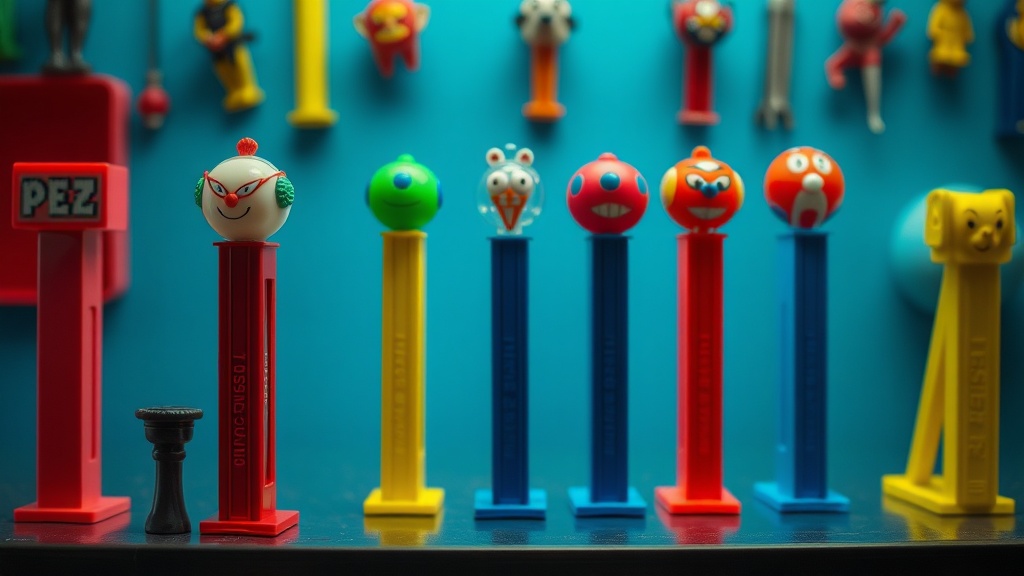
Why Do Some Pez Dispensers Sell for Thousands of Dollars?

In 2006, a single Pez dispenser changed hands for $32,000 — a 1970s soft-head prototype that looked nearly identical to the common plastic versions sitting in millions of candy aisles. That sale wasn't a fluke. Rare Pez pieces regularly command four-figure prices at auction, with dedicated collectors driving values higher each year. Understanding what separates a $2 thrift store find from a five-figure collectible isn't just trivia — it's practical knowledge that helps you spot undervalued pieces, avoid overpriced mistakes, and appreciate the real worth of your own collection.
Pez collecting operates differently from other toy markets. Unlike comic books or trading cards where condition dominates pricing, Pez values hinge on a more complex mix of production quirks, patent variations, and regional releases. The same character head can exist in a dozen versions — some worth pennies, others worth paychecks. Learning to recognize these distinctions transforms casual collecting into informed collecting.
What Makes a Pez Dispenser Rare?
Rarity in the Pez world rarely means "old." A dispenser from the 1950s might sell for $20 while a 1990s variant fetches $500. The factors that create genuine scarcity include production errors, limited regional releases, and pre-production prototypes that escaped into circulation.
Manufacturing mistakes drive significant value. Stem colors that weren't supposed to match certain heads — called "misfits" by collectors — become instant treasures. A standard Donald Duck head on a pink stem instead of the correct orange or blue stem turns a common piece into a $200+ find. These mismatches happened when factory workers grabbed wrong-colored stems during assembly, and quality control missed the error before packaging.
Country-specific releases create another scarcity layer. Pez produced dispensers exclusively for European markets, Japanese collectors, or specific promotional campaigns that never appeared in American stores. The Pez Visitor Center in Austria maintains archives of these regional variants, and their documentation helps collectors verify authenticity when these pieces surface in international markets.
Prototype dispensers represent the holy grail tier. Before full production runs, Pez created soft-head samples to test designs and molds. Most were destroyed, but some escaped through employees or factory connections. These prototypes feature different plastic compositions, unpainted details, or alternate color schemes that never reached retail. Their value comes from absolute uniqueness — when you own a prototype, you own the only one.
Which Pez Dispensers Are Worth the Most Money?
The highest-value Pez dispensers share common traits: extreme scarcity, documented provenance, and demand from serious collectors. The 1970s soft-head Political Donkey and Elephant prototypes top most value lists, with authenticated examples selling between $10,000 and $15,000. Only a handful exist, and their political theme taps into multiple collector markets beyond dedicated Pez enthusiasts.
Early character dispensers from the 1950s and 1960s command premiums when found in pristine condition. The original Santa Claus with full beard, early Mickey Mouse variations, and the Psychedelic Flower series (produced briefly in the late 1960s) regularly achieve $1,000+ sales. However, condition matters enormously with these older pieces — a Santa with paint wear or a cracked stem drops to $200 or less.
Licensed characters from limited runs create consistent value. The Pez Collectors News tracks sales data showing that certain Star Wars dispensers, particularly early Yoda and Stormtrooper variants with specific patent numbers, have appreciated 400% over the past decade. Sports promotional dispensers — especially those tied to specific games or playoff series — also outperform general releases.
How Can You Tell If Your Pez Dispenser Has Value?
Identifying valuable Pez dispensers requires systematic examination. Start with the patent number embossed on the stem's side — those tiny numbers indicate production era and help distinguish common versions from valuable variants. A "3.9" patent number versus "4.9" or "5.9" can mean the difference between a $5 piece and a $500 piece, even with identical character heads.
Check for "feet" — the small stabilizing platforms at a stem's base. No-feet dispensers (produced before 1987) generally carry premiums over their footed counterparts, though exceptions exist. Examine the head attachment mechanism: older dispensers use metal springs while modern ones use plastic. Metal spring versions indicate earlier production and potential value.
Color variations represent the trickiest valuation factor. A pink-stemmed Hello Kitty might be worth $300 while the identical head on a yellow stem sells for $8. Reference guides and collector databases help verify whether your color combination was factory-intentional or a manufacturing error — errors command premiums; standard variants don't.
Look for original packaging. Carded dispensers (still attached to their original display cards) multiply values significantly, especially for vintage pieces. Even modern dispensers on original cards outperform loose examples by 3-5x. Keep unopened dispensers sealed — the moment you open vintage packaging, you potentially destroy half its market value.
Where Do Collectors Find High-Value Pez Dispensers?
The hunt for valuable Pez dispensers happens across multiple venues, each with distinct advantages and risks. Estate sales and thrift stores still yield surprising finds — retirees cleaning out attics occasionally discard collections accumulated over decades, unaware that specific pieces carry serious value. These venues reward patience and knowledge; you'll sift through hundreds of common pieces for every valuable discovery.
Online marketplaces dominate modern collecting. eBay remains the largest secondary market, though seller claims require verification. Facebook collector groups offer more community vetting — experienced members often spot misidentifications or questionable authenticity before transactions complete. These groups also facilitate private sales between established collectors, sometimes bypassing auction fees.
Collector conventions provide the highest-value opportunities. The annual Pez conventions in California and Connecticut attract serious dealers and wealthy collectors. Live auctions at these events move six-figure inventory, but the real action happens in hotel room trading — private deals between collectors who've built relationships over years. Attending these events, even as an observer, teaches more about authenticating and valuing pieces than months of online research.
European sources deserve attention for American collectors. Austrian and German eBay sites, regional auction houses, and European collector forums access different inventory pools. Shipping costs and import taxes add complexity, but the pricing arbitrage can justify the hassle — pieces common in Europe remain scarce in American markets, and vice versa.
Building a valuable collection doesn't require massive budgets — it requires knowledge. A collector who understands patent numbers, manufacturing variations, and market trends will consistently outperform someone buying randomly at premium prices. The $32,000 prototype that started this conversation? It sold at auction to a collector who recognized what others missed. That kind of informed collecting — patient, research-driven, connected to community knowledge — separates true collectors from casual accumulators. Your next thrift store visit might reveal treasure, but only if you know what you're looking at.