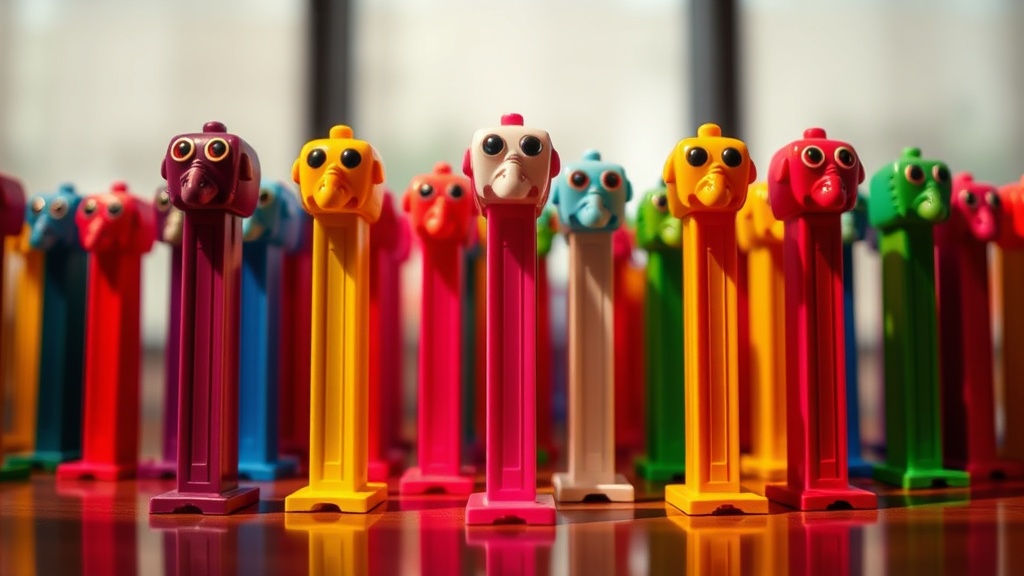
The Fascinating History of Pez Dispensers: From Quit Smoking Aid to Pop Culture Icons

Pez dispensers have transformed from a simple anti-smoking mint into one of the most recognizable collectibles on the planet. This post traces the journey from a 1920s Austrian pharmacy to modern pop culture stardom. Whether you're a seasoned collector hunting rare variants or simply curious about those colorful plastic heads sitting on your childhood shelf, you'll discover what makes these pocket-sized treasures worth thousands—and why the hobby continues to thrive today.
What Is the Origin of Pez Dispensers?
Pez began in 1927 Vienna as Pfefferminz—German for peppermint. Eduard Haas III, a confectionery visionary, developed these small brick-shaped mints as a cleaner alternative to smoking. The name itself came from the first, middle, and last letters of the German word.
The original packaging was nothing like today's iconic dispensers. Haas sold his mints in small tins. It wasn't until 1948 that the first mechanical dispenser appeared—a plain metal box resembling a cigarette lighter. Oscar Uxa patented this design, which allowed users to extract one mint at a time without touching the rest. Hygiene mattered—especially when you're trying to quit cigarettes.
The real revolution came in 1955. Pez-Haas (now Pez International) looked to break into the American market. Marketing research revealed a truth that would reshape the brand: American children weren't interested in mints or smoking cessation. They wanted fruit candy—and fun.
The company pivoted hard. They added fruity flavors. They introduced plastic heads atop the stems. Santa Claus and a space gun became the first character dispensers. Sales exploded. What started as a pharmaceutical aid had become a toy.
Worth noting: Pez maintains its headquarters in Traun, Austria, and still operates a manufacturing facility there. The official Pez website offers a timeline of their historical milestones for those wanting to explore further.
How Did Pez Dispensers Become Collectible?
The collectible movement emerged organically in the 1980s as adults who grew up with Pez began seeking nostalgic connections. Early collectors traded at flea markets and through newsletter exchanges. The first organized Pez convention happened in 1991 in Mentor, Ohio—drawing 600 enthusiasts.
Today, the community spans the globe. The Pez Collectors Store serves as a major marketplace and information hub. Annual conventions in California, Connecticut, and Austria attract thousands. Some collectors specialize by decade; others chase specific characters, countries of manufacture, or patent variations.
Here's the thing about Pez collecting: scarcity isn't always obvious. A dispenser might look identical to another but carry subtle differences that multiply its value tenfold. The patent number molded into the stem, the country stamp, the shade of plastic—these details separate a $5 curiosity from a $5,000 prize.
The most valuable pieces combine rarity with condition. A Merry Melodies soft-head dispenser from the 1970s—featuring characters like Bugs Bunny or Daffy Duck with flexible rubber heads—can command $3,000 to $5,000 in mint condition. The 1982 World's Fair Astronaut B, limited to a promotional run, once sold for over $30,000.
Condition grading follows established standards:
| Grade | Description | Value Impact |
|---|---|---|
| Mint in Package (MIP) | Unopened, original packaging intact, no wear | 100% (baseline) |
| Mint (M) | No packaging, but pristine condition, no flaws | 60-80% |
| Near Mint (NM) | Minor wear, possibly light scratches | 40-60% |
| Excellent (E) | Visible wear but complete and functional | 20-40% |
| Good (G) | Heavy wear, possible damage, still identifiable | 5-20% |
That said, condition isn't everything. Some collectors specifically hunt "well-loved" pieces for their character—or because they're the only ones they can afford. The community welcomes enthusiasts at every price point.
What Are the Rarest and Most Valuable Pez Dispensers?
Serious collectors recognize several holy grails that rarely appear on the open market. Understanding these rarities helps contextualize what drives value in this hobby.
The Political Donkey (circa 1961) stands among the most sought-after. Only two confirmed examples exist—both featuring a donkey head atop a standard stem, produced for a political promotion that was quickly canceled. One resides in the Pez Visitor Center in Austria; the other traded privately for a figure reported to exceed $10,000.
The 1982 World's Fair Astronaut B represents promotional scarcity done right. Created for the Knoxville, Tennessee exposition, these dispensers featured a blue helmet and red stem. Most were given away to fair attendees. Few survived unopened.
Soft-head dispensers from the 1970s command premiums across the board. Unlike later rigid plastic versions, these featured rubbery heads attached to plastic stems. Over time, the rubber deteriorated—making intact examples increasingly rare. The Mickey Mouse Soft Head and Psychedelic Eye (a flower with a central eye design) consistently sell for $2,000 to $4,000.
European exclusives create another collecting tier. The Captain Hook from the early 1970s—never released in North America—features detailed molding that later versions simplified. Pez Pals (generic human characters without licensed ties) appeared primarily in German and Austrian markets during the 1970s and 80s.
The catch? Reproductions and fakes flood the market. Modern counterfeiters can replicate vintage molds with frightening accuracy. Authenticating a high-value piece requires examining patent details, mold marks, and sometimes chemical testing of the plastic itself. Established dealers provide certificates of authenticity; auction houses like eBay's verified collectibles program offer buyer protections—but expertise remains your best defense.
How Has Pez Stayed Relevant in Modern Culture?
Pez dispensers have transcended their candy-delivery origins to become genuine cultural artifacts. The brand's licensing strategy explains much of this longevity—continuously refreshing the product line with characters from whatever dominates children's entertainment.
Current offerings include Disney princesses, Marvel superheroes, Star Wars icons, and Pokémon. Limited editions celebrate holidays, movie releases, and corporate partnerships. The Funko Pop Pez crossover series—merging two collectible giants—demonstrates how the brand adapts without abandoning its core identity.
Museums have recognized this cultural significance. The Burlingame Museum of Pez Memorabilia in California operated for decades as a pilgrimage site (it closed in 2019, though its collection dispersed to other institutions). The official Pez Visitor Center in Orange, Connecticut, draws over 100,000 visitors annually. Interactive exhibits, production viewing windows, and a retail shop with exclusives make it a destination.
Pop culture references abound. The 1990s Seinfeld episode featuring a Tweety Bird Pez dispenser—called a "Pez dispenser" throughout—introduced the collectible concept to millions who'd never attended a convention. Eminem referenced Pez in his lyrics. Artists have incorporated dispensers into sculptures and installations.
Secondary markets keep expanding. What began as newsletter trading evolved through eBay dominance to specialized platforms. Facebook groups host thousands of members sharing daily finds. YouTube channels unbox vintage lots and discuss authentication techniques. The community has grown younger, more diverse, and increasingly digital—without losing the tactile thrill of holding a piece of plastic history.
Starting Your Own Collection: Where to Begin?
Newcomers often feel overwhelmed by the sheer volume of dispensers produced—over 1,500 unique heads across seven decades. The smart approach? Narrow your focus.
Character collecting offers an accessible entry point. Love Star Wars? Pez has produced dozens of variants since 1997, from classic trilogy characters to Mandalorian figures. Disney enthusiast? Hundreds of options exist, from mainstream princesses to obscure park exclusives. Holiday themes provide seasonal collecting rhythm—Christmas and Halloween releases generate particular enthusiasm.
Budget collectors should explore:
- Modern releases available at grocery stores and pharmacies ($2-5 each)
- Recent retired designs selling at slight premiums online ($10-30)
- Lot purchases—bulk collections where individual pieces average under $5
- International variants from travel or import shops
Mid-tier collectors ($500-2,000 annual budget) might target:
- Complete licensed sets (all Avengers dispensers, for example)
- Specific decades (the psychedelic 1970s, the licensed-character boom of the 1990s)
- Convention exclusives and limited runs
Storage matters more than beginners assume. UV light degrades plastic colors over decades. Pez dispensers should live in darkness—in drawers, cabinets, or dedicated display cases with UV-filtering glass. Temperature fluctuations stress the plastic; basements and attics generally disappoint.
Display options range from simple (wall-mounted shadow boxes from Michaels or Hobby Lobby) to elaborate (custom acrylic cases with integrated lighting). Some collectors arrange chronologically; others group by theme or color. There's no wrong approach—only the one that sparks joy when you walk past it.
The Pez dispenser journey—from Austrian smoking cessation to global collectible phenomenon—reflects something fundamental about human nature. We attach meaning to objects. We treasure childhood connections. We find community in shared enthusiasm. That 99-cent piece of plastic on the drugstore rack? It might just be someone's prize possession. And tomorrow, it could be yours.