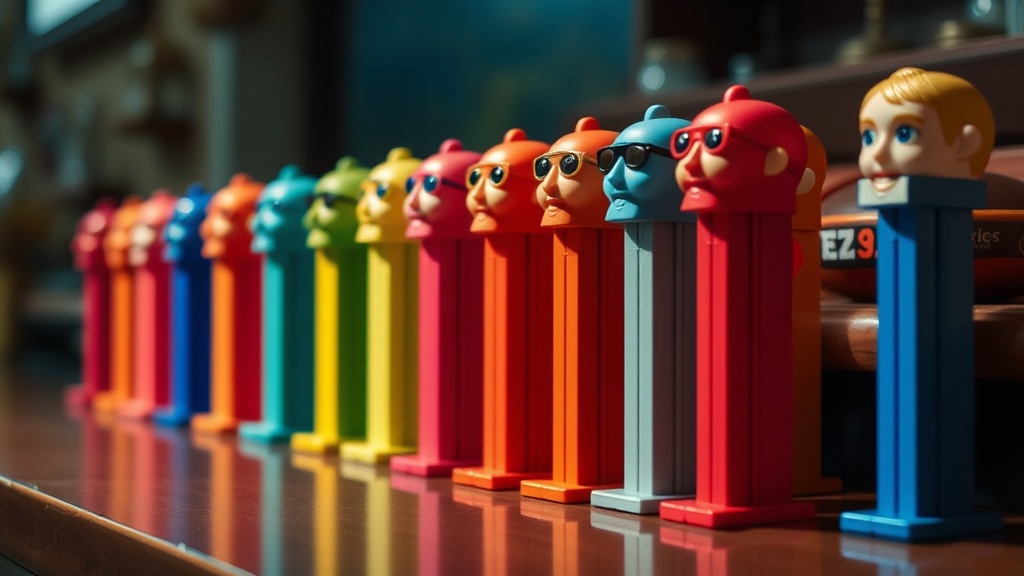
The Complete Guide to Collecting Vintage Pez Dispensers

What This Guide Covers (and Why You Should Care)
This guide walks through everything needed to start—or level up—a vintage Pez dispenser collection. From identifying rare stems to spotting fakes, understanding value factors, and knowing where to buy (without getting burned), this is the playbook collectors wish they'd had starting out. Whether digging through a flea market bin or browsing eBay at midnight, the knowledge here saves money and prevents costly mistakes. Vintage Pez isn't just nostalgia—it's a legitimate collectible category with pieces worth hundreds, even thousands of dollars.
What Makes a Pez Dispenser "Vintage"?
A Pez dispenser qualifies as vintage when manufactured between 1955 and roughly 1990. That 35-year window covers the golden era of Pez collecting—the introduction of character heads, the famous "feet" (those small stabilizing nubs at the base), and the most sought-after variations.
Here's the thing: age alone doesn't determine collectibility. Condition, rarity, and character type matter far more. A 1960s common Santa in beat-up condition might fetch $15. A 1970s soft-head astronaut in mint condition? That could command $300 or more.
The timeline breaks into distinct eras collectors recognize immediately:
- Pre-1955: The "regular" era—plain rectangular boxes, no characters. True antiques, but not what most collectors chase.
- 1955-1964: The "no feet" era—full-body characters, no stabilizing nubs. These command premium prices.
- 1964-1987: The "feet" era—introduced the iconic base nubs. Most "classic" vintage pieces fall here.
- 1987-present: Modern era—still collectible, but generally less valuable unless limited editions or errors.
Worth noting: the 1987 cutoff isn't arbitrary. That's when Pez introduced the new patent stem design, changing the internal mechanism significantly. Collectors pay attention to these details.
How Do You Identify Rare and Valuable Pez Dispensers?
Rare Pez dispensers share specific traits: discontinued characters, manufacturing errors, limited production runs, and pristine condition. The most valuable pieces combine several of these factors.
The "holy grails" of Pez collecting include:
- The 1982 World's Fair Astronaut: Only two known examples exist. One sold at auction for over $32,000. (Yes, really.)
- Political Donkey/Elephant (1961): These no-feet political characters in pristine condition regularly fetch $500-$1,000.
- Psychedelic Eye (1960s): A full-body flower power design that's increasingly hard to find complete.
- Make-a-Face: Produced only from 1971-1972, this Mr. Potato Head-style dispenser lets kids swap features. Complete sets with all accessories command $300+.
The catch? Fakes exist. Reproductions flood the market, especially for high-value no-feet characters. Legitimate vintage pieces have specific mold marks, stem patents (look for "U.S. Patent" numbers), and plastic characteristics that differ from modern reproductions. When in doubt, consult the official Pez website or trusted collector communities before dropping serious money.
Manufacturing Errors That Increase Value
Errors make Pez collectors go wild. Factory mistakes—when caught before correction—create instant rarities:
- Missing features: A cow without spots, a Santa without a beard.
- Wrong heads on stems: Character heads swapped onto incorrect colored stems at the factory.
- Paint variations: Unusual color schemes that deviate from standard production.
- Mold variations: Subtle differences in how the character was cast.
That said, not every "error" is genuine. Post-factory modifications happen. A "rare" color variation might just be a faded common piece. Authentication matters.
What Should You Look for When Buying Vintage Pez?
Smart buying requires systematic evaluation. Here's what separates a $5 thrift store find from a $500 score:
| Factor | What to Check | Impact on Value |
|---|---|---|
| Condition | Paint wear, scratches, stem cracks, head wobble | Mint condition = 3-10x higher value than "good" |
| Completeness | Original packaging, paperwork, candy (unopened) | Carded pieces command significant premiums |
| Patent Number | 2.6, 3.4, 3.9, 4.9, 5.9 (found on stem) | Earlier patents generally more valuable |
| Feet vs. No Feet | Check base for stabilizing nubs | No-feet era (pre-1964) typically worth more |
| Country of Origin | Austria, Slovenia, Hungary, China, USA | Austrian-made vintage pieces most desirable |
| Character Rarity | Discontinued licenses, short production runs | Licensed characters (Disney, DC Comics) often premium |
Paint condition matters enormously. "Mint" means no visible wear, no scratches, vibrant colors. "Near mint" allows minor flaws. Anything below "very good" (visible wear, paint loss, minor damage) drops value substantially. Serious collectors often won't touch pieces with significant paint loss unless they're extraordinarily rare.
Stem Patents Explained
Flip any Pez dispenser over and check the stem. Those patent numbers tell you when and where it was made:
- 2.6 (1952): The original. Extremely rare on character heads.
- 3.4 (1968): Common on no-feet era pieces.
- 3.9 (1976): The transition period.
- 4.9 (1987): Modern era begins—feet standard, new mechanism.
- 5.9 (1995): Current production standard.
Matching the patent to the character era validates authenticity. A "no feet" character with a 4.9 patent? That's a reproduction or swap—worth fractions of an authentic piece.
Where's the Best Place to Buy Vintage Pez Dispensers?
Sources range from $2 flea market scores to $2,000 dealer purchases. Each has trade-offs:
Flea Markets and Garage Sales — The thrill of the hunt. Prices are often lowest (sellers don't know what they have), but selection is random. Success requires patience, knowledge, and luck. The best finds happen early—serious collectors arrive when sellers unpack.
eBay — Massive selection, but buyer beware. Photos hide flaws. Descriptions exaggerate condition. Counterfeits circulate. Only buy from sellers with strong feedback, detailed photos, and reasonable return policies. Ask questions before bidding.
Pez Conventions — Yes, these exist. The annual National Pez Convention in Ohio draws collectors worldwide. Prices are market-rate (no steals), but authenticity is guaranteed, selection is unmatched, and the community knowledge is invaluable for learning.
Estate Sales — Elderly collectors built serious accumulations. When estates sell, entire collections hit the market at once. Watch estate sale listings in your area—"vintage toys" or "collectibles" often include Pez.
Collector Groups and Forums — Facebook groups, Reddit's r/pez community, and dedicated forums connect buyers with sellers who know the market. Prices trend fair—sellers know values, but so do buyers. The community self-polices against fakes.
Antique Malls and Vintage Shops — Convenient for browsing, but prices often inflated. Dealers research before pricing. Occasional bargains exist for pieces they misidentified.
Auction Houses and High-End Dealers
For four-figure pieces, established dealers and specialty auction houses (like Hake's Auctions) offer authentication, grading, and buyer protection. You'll pay full market price—or premium—but the risk of fakes drops dramatically.
How Should You Store and Display Your Collection?
Proper storage protects value. Pez dispensers are surprisingly fragile—paint rubs off, stems crack, heads loosen.
Avoid direct sunlight. UV fades colors, especially reds and yellows. That mint-condition Mickey Mouse becomes a washed-out disappointment within months of windowsill display.
Control humidity. Extreme moisture warps stems and promotes mold in packaging. Ideal storage stays between 60-75°F with moderate humidity.
Display options vary by collection size and budget:
- Shadow boxes: Wall-mounted, protect from dust, look sharp.
- Glass display cases: Premium option, UV-protective glass available.
- Plastic storage bins: Functional for bulk storage, but not display-worthy.
- Original packaging: If you have carded pieces, leave them sealed. Opening destroys significant value.
Here's the thing about "loose" versus "carded" collecting: it's a personal choice, but carded pieces appreciate faster. A loose 1960s Spider-Man might be $50. The same character sealed on original card? $400+. Serious collectors often build two collections—display pieces they handle and investment-grade carded pieces they store.
Common Mistakes New Collectors Make
Everyone starts somewhere. These missteps cost money and frustration:
Overpaying for common pieces. That "vintage" Santa from 1995? They made millions. It's worth $3, not $30. Research before buying.
Ignoring condition. A rare character in terrible condition isn't a bargain—it's a damaged collectible. Hold out for better examples.
Cleaning incorrectly. Harsh chemicals, scrubbing, or dishwasher "cleaning" destroys paint and value. Light dusting with a soft cloth suffices for display pieces.
Buying "rare" variations that aren't. Sellers invent rarity. "Limited edition" often means "we made plenty but want more money." Verify claims through collector resources.
Neglecting documentation. Photograph acquisitions. Record purchase prices, sources, and any authentication. Future you—or your heirs—will appreciate the records.
Building Your Collection Strategy
Successful collecting needs focus. "Buying everything" leads to cluttered shelves and empty wallets. Consider these approaches:
Character-focused: All Disney. All DC Comics. All holiday themes. All animals. Specialization builds expertise—and often, a more valuable collection.
Era-focused: No-feet only. 1970s soft-heads. Political characters. Narrowing by production period creates cohesive displays.
Completionist: Every variation of a single character. Every Batman ever produced. Challenging, expensive, impressive when achieved.
Investment-focused: Buying only authenticated, high-grade pieces with documented rarity. Less emotional, more financial.
There's no wrong approach—just the one that keeps you engaged and within budget. The Pez collecting community welcomes newcomers. Connect with experienced collectors, attend a convention, join online discussions. The knowledge shared freely within this hobby saves beginners from expensive mistakes and builds friendships that last decades.
Happy hunting.