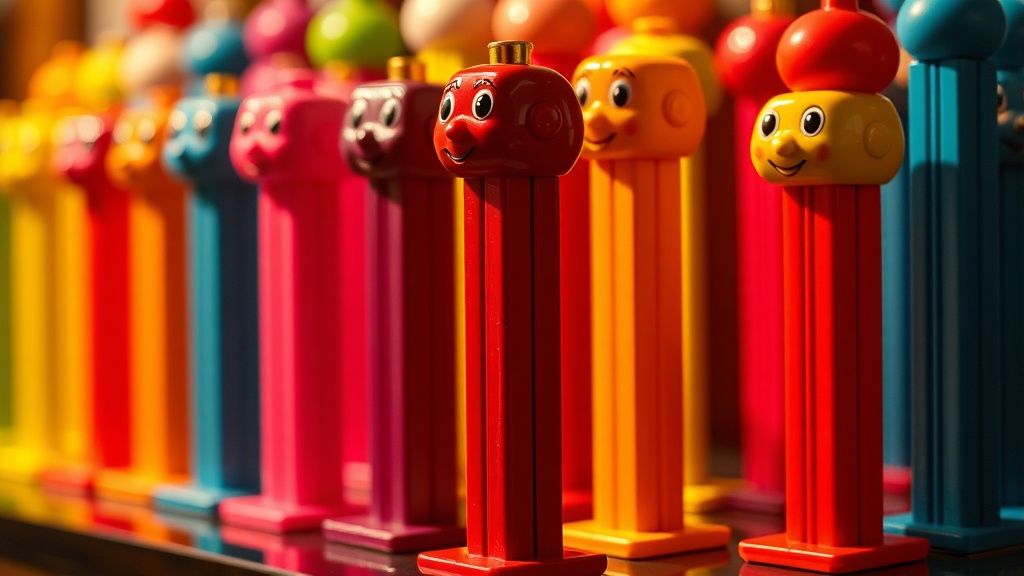
The Complete Beginner's Guide to Collecting Pez Dispensers

This guide covers everything a newcomer needs to start collecting Pez dispensers—from spotting vintage stems and understanding patent numbers to budgeting, sourcing authentic pieces, and displaying them without damage. Whether someone recently rediscovered a childhood candy container in an attic box or wants an affordable entry point into the collectibles and toys market, Pez offers a hobby that's approachable, visually fun, and occasionally profitable. You'll learn how to identify valuable variations, where to shop without getting scammed, and how to keep plastic stems from cracking in direct sun. By the end, you'll know exactly what to look for at flea markets and how to tell a $3 common from a $3,000 rarity. No backstory or prior expertise is required.
What Makes Pez Dispensers Worth Collecting?
Pez dispensers are small mechanical candy containers topped with pop-culture, holiday, or advertising character heads, originally invented in 1927 by Austrian entrepreneur Eduard Haas III. (The brand name derives from the German word Pfefferminz—peppermint.) By the 1950s, the company had shifted to fruit-flavored candies and whimsical character heads to appeal to American children, accidentally creating one of the most enduring collectible toy categories in history.
Collectors are drawn to the hunt. Thousands of variations exist across movies, sports, politics, and seasonal themes. You might find a 1970s Mickey Mouse Soft Head at a garage sale for a few dollars, or bid on a rare Captain Hook prototype online. The community is welcoming, too—clubs and conventions meet regularly in cities across the United States and Europe, and there's genuine joy in trading duplicates for that one missing stem. Unlike some hobbies that demand deep technical knowledge upfront, Pez collecting lets beginners learn as they build. Each dispenser tells a small story about manufacturing trends, licensing deals, or cultural moments frozen in plastic. For many, the appeal is tactile and nostalgic. There's something satisfying about clicking a head back and hearing that familiar spring-loaded snap.
How Much Should Beginners Spend on Pez Dispensers?
Starting a collection can cost less than a fast-food meal. Modern dispensers—like the Hello Kitty series, Marvel Avengers characters, or Despicable Me Minions—retail for roughly $2 to $5 at grocery chains, pharmacies, and big-box stores such as Walmart and Target. Vintage commons from the 1960s through the 1980s typically range from $10 to $40 depending on wear, completeness, and whether they still have the original packaging.
That said, prices climb quickly for rarities. A 1960s Political Donkey with no feet can sell for over $5,000. The 1982 Make-A-Face dispenser—recalled shortly after release because small parts posed a choking hazard—regularly commands four figures at auction. The catch? It's easy to overspend when scrolling through eBay at midnight. Worth noting: setting a firm monthly budget (say $30 to $50) keeps the hobby sustainable and prevents buyer's remorse. Focus on themes you actually enjoy—holidays, superheroes, or retro cartoons—rather than chasing every limited release. Here's the thing: don't ignore cheap lots. A $15 bag of mixed dispensers from a thrift store often hides one or two gems that pay for the entire purchase.
What Are the Most Valuable Pez Dispensers to Watch For?
Value in the Pez world hinges on three factors: scarcity, condition, and patent type. Dispensers produced before 1987 lack the small stabilizing tabs on the base—these are called "no feet" and are generally older and more desirable. Soft-head dispensers (made from rubbery material rather than hard plastic) were produced primarily in the 1950s and 1960s and carry significant premiums. Prototypes, misprints, and recalled models sit at the top of the price pyramid, often selling only through private collector networks or high-end auction houses.
Here's a quick breakdown of how specific features affect market value:
| Feature | Typical Value Impact | Example |
|---|---|---|
| No feet (pre-1987) | Higher—indicates older production | 1960s Santa Claus A |
| Soft head | Significant premium | Mickey Mouse Soft Head |
| Patent number on stem | Helps authenticate and date | 3.4 Austria, 3.9 Austria, U.S. Patents |
| Original packaging (MIP) | Can double or triple value | 1980s Star Wars characters on card |
| Errors / misprints | Major premium for oddities | Color-flipped factory mistakes |
Worth noting: not every old dispenser is gold. A well-used 1970s witch without packaging might only fetch $8. Condition matters just as much as age. Here's the thing: a common dispenser in mint condition with its original card can outsell a rare stem that's cracked or missing its spring.
Where Can You Find Authentic Pez Dispensers?
Physical hunting grounds still yield the best stories—and sometimes the best prices. Flea markets, antique malls, estate sales, and dedicated toy shows are excellent sources for vintage pieces. In Asheville, North Carolina, spots like the Antique Tobacco Barn occasionally display vintage Pez in glass cases alongside other mid-century toys. Estate sales in New England—particularly near the original Pez Visitor Center in Orange, Connecticut—sometimes surface family collections that haven't seen daylight in decades. Toy shows like the National PEZ Convention attract serious collectors and often feature tables where beginners can ask questions without pressure.
Online, eBay remains the largest secondary marketplace, but caution is necessary. Counterfeit "fantasy" dispensers (unofficial designs made to look vintage) circulate regularly, especially among Star Wars and Disney themes. For guaranteed authenticity, buy directly from Pez.com or authorized retailers like the Pez Collectors Store. Facebook collector groups and Reddit communities also facilitate trades, though newcomers should verify seller feedback and request clear photos of the stem base before sending payment. Etsy can be a source for vintage lots, but prices there often include a nostalgia markup.
How Should You Store and Display a Pez Collection?
Sunlight is the single biggest threat to painted plastic. UV exposure fades colors and can make stems brittle over time. Store and display dispensers in a cool, dry room away from direct windows. For active display, Michael's Recollections shadow boxes with individual compartments keep heads from bumping and paint from chipping. The IRIS USA Desktop Drawer units work well for bulk inventory, allowing you to sort by theme or decade without stacking stems too tightly.
For high-value pieces—especially soft heads or mint-in-package rarities—a Pelican 1200 case with custom foam cutouts offers protection from dust, moisture, and accidental drops. (Yes, it sounds like overkill for candy toys, but a $3,000 prototype deserves airline-grade padding.) Keep dispensers out of attics and garages where temperature swings cause plastic to expand and contract. If you're running out of space, rotate what's on display every few months rather than cramming shelves. Dusting with a microfiber cloth every couple of weeks keeps paint looking fresh without abrasion.
What Do Beginners Need to Know About Condition and Cleaning?
Condition grading in the Pez community follows a straightforward scale: Mint in Package (MIP), Mint (no visible wear), Excellent (minor flaws), Good (play wear), and Poor (damage or missing parts). Always inspect the metal spring pin, the tension of the head hinge, and the stem for hairline cracks. A wobbly head isn't always a dealbreaker—the pin may simply need gentle reseating with needle-nose pliers—but missing feet or chipped paint drops the grade quickly.
Cleaning Old Dispensers Safely
Most dirt and sticky residue comes off with warm water, mild dish soap, and a soft toothbrush. (A child's toothbrush reaches into Yoda's ears or Elvis's pompadour nicely.) Avoid bleach, alcohol, or abrasive scrubbers. The catch? Never fully submerge a vintage soft-head dispenser. The rubbery material can absorb water and degrade over time. Instead, spot-clean the head with a barely damp cloth and dry it immediately. For ink marks or sticker residue, a tiny amount of Goo Gone on a cotton swab works—just rinse and dry thoroughly afterward.
Start small. Buy what makes you smile. The best Pez collections aren't built overnight—they're assembled one flea market find, one trade-show scoop, and one nostalgic character at a time.