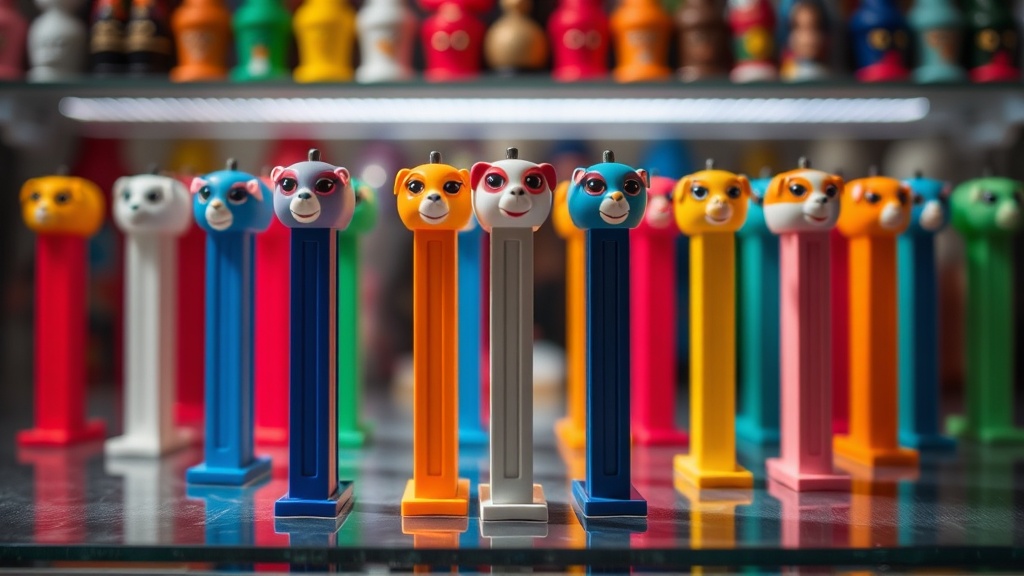
How to Spot Authentic Pez Dispensers and Avoid Reproductions

The counterfeit toy market costs collectors an estimated $600 million annually—and Pez dispensers are no exception. What started as a simple Austrian candy delivery mechanism has spawned a thriving secondary market where fakes, reproductions, and outright scams lurk around every digital corner. Whether you're hunting for a $10 shelf piece or a $2,000 grail, knowing how to separate the genuine article from clever knockoffs will save your wallet—and your reputation among fellow collectors.
How Can You Tell a Real Pez From a Fake?
Authentic Pez dispensers carry specific manufacturing hallmarks that reveal their origin story. The most reliable indicator lives on the stem—flip your dispenser over and examine the injection molding marks. Genuine vintage pieces from the 1960s and 1970s typically feature "U.S. Patent" or patent number imprints, while European releases often display country-of-origin stamps like "Austria" or "Made in Hungary." Reproductions frequently miss these details entirely or use blurry, shallow impressions that lack the crisp definition of factory-original molding.
Next, scrutinize the candy chamber. Authentic Pez dispensers use high-quality polystyrene or cellulose acetate that feels substantial in your hand—never flimsy or lightweight. The spring mechanism should snap back with satisfying resistance; loose, wobbly heads or sluggish springs often signal aftermarket components or cheap replicas. Color consistency matters too—genuine vintage pieces display slightly muted, era-appropriate palettes, while fakes sometimes blast neon hues that never existed in the original production runs.
The head-to-stem connection offers another telltale sign. Original Pez dispensers feature precisely engineered friction fits that hold securely but allow smooth movement. Counterfeits often glue heads permanently in place or create gaps where the pieces meet. Run your finger along that seam—authentic manufacturing leaves minimal visible lines, whereas reproductions show obvious separation or excess plastic flash.
What Are the Most Common Pez Reproductions?
Certain characters attract counterfeiters like magnets. The 1970s Psychedelic Eye—a wildly colored flower-power face—routinely appears in fake form at online auctions. Authentic versions command $3,000-$5,000, making them tempting targets for reproduction artists. The Captain Hook soft head from the 1970s Disney series and early Star Wars characters (particularly Chewbacca and Darth Vader) also flood the secondary market with convincing copies that fool inexperienced buyers.
Modern "fantasy" pieces present a different challenge—these aren't technically counterfeits since they replicate designs Pez never actually produced. A purple stemmed Mickey Mouse or neon-green Batman never existed in official catalogs, yet skilled artisans create these imaginary variants and sell them to unsuspecting newcomers who assume they're rare prototypes. Always cross-reference questionable pieces against established databases like the official Pez website or Pez Collectors Store before purchasing anything described as "prototype" or "test market."
Where Should You Buy Authentic Pez Dispensers?
Your sourcing strategy dramatically impacts authenticity odds. Established dealers who specialize in Pez—like those registered with the Pez Collectors News community—maintain reputations built on decades of accurate authentication. These sellers provide detailed photographs, provenance documentation, and return policies that protect buyers. Convention vendors who've attended Pez conventions for years face immediate community accountability if they sell fakes, creating natural quality control.
Online marketplaces require heightened vigilance. eBay's "Pez" category moves thousands of units weekly, but photographs hide sins. Demand clear images of patent stamps, stem bottoms, and side profiles before bidding. Avoid listings using stock photos or blurry smartphone snapshots. Facebook Marketplace and Craigslist occasionally yield genuine finds from estate sales, but these "in the wild" discoveries demand in-person inspection when possible.
What Documentation Should You Request?
Provenance separates serious collecting from casual buying. For high-value pieces (those exceeding $500), request documentation showing ownership history, previous sales records, or convention purchase receipts. Original packaging—especially the thin cardboard sleeves from the 1950s and 1960s—dramatically increases authenticity confidence, though these accompaniments add significant cost.
Third-party authentication services exist within the Pez community, though they're less formalized than sports memorabilia grading. Experienced collectors often provide "authentication opinions" through photography review, while major conventions sometimes offer on-site verification. Building relationships with longtime collectors grants you access to this informal expertise network—attend a Pez convention (there are several annually across the United States) and you'll find generous veterans willing to share authentication knowledge.
How Do You Protect Yourself From Scams?
Price intuition serves as your first defense. That "rare" 1950s Space Gun listed for $45? Impossible—the authentic version sells for $1,200+. If deals seem too good to be true, they absolutely are. Scammers exploit FOMO (fear of missing out) with urgency tactics: "Only one left!" or "Another buyer is interested!" Legitimate rare Pez sales move methodically—serious sellers understand collectors research extensively before committing.
Payment methods matter enormously. Credit cards and PayPal Goods & Services offer buyer protection that wire transfers, cryptocurrency, and "friends and family" PayPal transfers lack. Never send payment through irreversible methods unless you've established trusted relationships with sellers over multiple transactions. Document everything—save screenshots of listings, preserve email correspondence, and photograph packages upon receipt.
Finally, invest in reference materials. The Ultimate Guide to Vintage Pez Dispensers by Richard Geary remains the collector's bible, with detailed photographs of authentic pieces across decades of production. Digital resources like the Pez Collector's Database provide comparative imagery that helps spot discrepancies. The $30-50 spent on authoritative references pays for itself many times over by preventing single costly mistake purchases.
Building Your Authentication Instinct
Authenticating Pez dispensers combines technical knowledge with gut feeling developed through handling hundreds (eventually thousands) of genuine pieces. Start modestly—authenticate common, inexpensive dispensers before attempting high-value acquisitions. Join online communities where collectors share "spot the fake" challenges and discuss new reproduction techniques circulating through the market. Over time, you'll develop the collector's sixth sense—that immediate recognition when something feels "off" about a piece's weight, color, or construction. The hunt for authentic Pez treasures rewards those who approach it with patience, skepticism, and continuous learning.