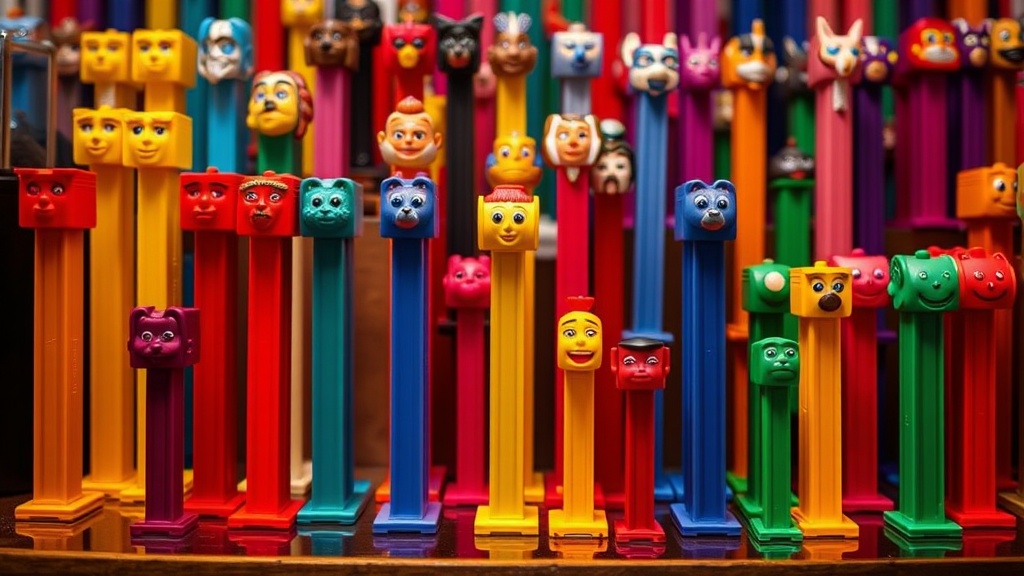
How to Create a Stunning Pez Dispenser Display Collection

This post covers the complete process of creating a visually striking Pez dispenser display collection—from selecting the right shelving and lighting to arranging pieces by theme, color, or era. Whether starting with fifty dispensers or five hundred, the way a collection is presented transforms scattered pieces into a cohesive showcase that sparks conversation and protects the investment.
What Are the Best Display Options for Pez Dispensers?
The best display options for Pez dispensers include wall-mounted shadow boxes, acrylic risers, glass curio cabinets, and custom-built shelving units. The right choice depends on collection size, available space, and whether the goal is protection from dust or maximum visual impact.
Wall-mounted shadow boxes have become the go-to for serious collectors. IKEA's RIBBA series—discontinued but widely available secondhand—offers a 19.75" x 19.75" frame with adjustable depth that fits most standard Pez stems perfectly. The shadow box approach keeps dispensers visible while protecting them from curious hands and household dust. That said, the RIBBA's fixed depth can be limiting for oversized character heads (think the Star Wars Death Star or Marvel Hulk dispensers).
Acrylic risers work beautifully inside existing bookshelves or on tabletops. Brands like Clear Solutions and Azar Displays offer tiered platforms that create depth and ensure each dispenser face remains visible. The catch? Acrylic scratches easily, and the material creates static that attracts dust like a magnet.
Glass curio cabinets—vintage pieces from the 1970s and 80s—add character while offering 360-degree viewing. Look for cabinets with adjustable shelving; Pez stems range from 4.5 inches (standard) to 6.5 inches (oversized characters), so fixed shelves rarely accommodate mixed eras effectively.
| Display Type | Best For | Price Range | Dust Protection |
|---|---|---|---|
| Shadow Boxes (IKEA RIBBA) | Wall mounting, themed groupings | $15 - $40 | Excellent |
| Acrylic Risers | Bookshelf integration | $20 - $60 | Poor |
| Glass Curio Cabinets | Large collections, vintage appeal | $150 - $500 | Good |
| Custom Built-ins | Permanent installations | $500+ | Customizable |
| Shot Glass Display Cases | Small stem dispensers | $25 - $80 | Excellent |
How Should Pez Dispensers Be Organized in a Display?
Pez dispensers should be organized by theme, chronological release date, color spectrum, or character franchise—the method depends on what story the collection tells and which pieces deserve prominence. There's no single "right" approach, and many collectors reorganize seasonally or when acquiring significant new pieces.
Theme-based organization remains the most popular approach. Grouping dispensers by licensed characters (Disney, Star Wars, Marvel, DC Comics), seasonal releases (Halloween, Christmas, Valentine's), or Pez-specific series (Funky Faces, Glow-in-the-Dark, Crystal) creates immediate visual coherence. Here's the thing: themed groupings make it easier for visitors to engage with the collection—"Oh, you have the entire 1999 Star Wars set!" resonates more than a random jumble.
Chronological organization appeals to collectors who view Pez as historical artifacts. The first Pez dispensers appeared in 1948 (the full-body Santa, Robot, and Space Gun), and tracking the evolution from those simple designs through the 1950s full-body circus characters to the modern "A-head" style tells a compelling design story. Worth noting: early dispensers command premium prices, so chronological displays often place the most valuable pieces at eye level.
Color gradient arrangements—arranging dispensers from red through orange, yellow, green, blue, to purple—create stunning visual impact, particularly in well-lit spaces. This approach works best with loose dispensers (removed from packaging) and can transform a collection into genuine room decor. The trade-off? Finding a specific dispenser becomes challenging unless there's an accompanying inventory system.
"The best displays tell a story. My wall starts with 1950s full-body clowns and progresses through every decade—visitors can literally see how Pez design evolved from simple painted metal to the complex licensed characters kids recognize today." — From a collector interview at the 2023 Burlingame Pez Museum
Labeling and Documentation Systems
Every serious display needs a documentation system. Small adhesive labels—printed on acid-free paper and attached to display backs or shelf edges—should include: dispenser name, release year, patent number (if significant), and any notable variations. Some collectors use QR codes linking to Pez.com or personal inventory spreadsheets.
Avoid placing labels directly on dispensers. Even removable adhesives can damage paint on vintage pieces, and the residue attracts dust. For carded dispensers (still in original packaging), label the shelving beneath the hanging card, not the card itself.
What Lighting Works Best for Pez Dispenser Collections?
LED strip lighting with a color temperature between 4000K and 5000K works best for Pez dispenser collections—this range mimics natural daylight, reveals true colors accurately, and doesn't produce the heat that can warp plastic stems or fade painted details over time.
Installation matters as much as bulb choice. Light positioned above and slightly in front of dispensers eliminates shadows cast by oversized character heads. For shadow boxes, LED strips mounted along the top interior frame create even illumination without visible bulbs. The catch? Cheap LED strips often have inconsistent color temperatures along the length—spend the extra $10-15 for quality brands like Philips Hue or Govee.
UV exposure remains the enemy of vintage Pez. Direct sunlight through windows can fade the vibrant reds and yellows that make classic dispensers so appealing—some collectors have watched decade-old pieces turn pink in just two years of window exposure. If the display location receives natural light, apply UV-filtering film to windows or rotate dispensers every few months to ensure even aging (or rather, even non-aging).
Accent lighting—small spotlights or puck lights—can highlight centerpiece dispensers. The 1982 World's Fair Astronaut B, the 2006 limited-edition Disney Villains set, or any dispenser with a known production under 1,000 units deserves special attention. That said, spotlighting every piece creates visual chaos; choose three to five anchor items and let the surrounding collection support them.
Battery vs. Hardwired Lighting
Battery-operated LED strips offer flexibility for renters or those testing display configurations, but the maintenance becomes tedious—expect to replace AAA batteries every 3-4 weeks with regular use. Hardwired LED systems (even plug-in adapters) provide consistent brightness and eliminate the sudden dimming that makes collections look neglected. For glass curio cabinets, retrofit kits from Home Depot's lighting section or specialized suppliers like Environmental Lights integrate cleanly.
How Do You Protect Pez Dispensers While Displaying Them?
Protecting displayed Pez dispensers requires controlling humidity, limiting UV exposure, using inert materials for contact points, and establishing handling protocols—especially for pieces manufactured before 1987, when Pez switched to more stable plastic formulations.
Humidity control proves particularly important in regions with seasonal variation (like Lina's Asheville, where summer humidity regularly hits 80%). Silica gel packets in enclosed displays absorb moisture that can cause "stem squeeze"—the compression that makes dispensers difficult to operate. Replace silica packets every 6-12 months; when they feel saturated, they've stopped working.
Material compatibility matters more than most collectors realize. PVC—common in inexpensive display materials—releases plasticizers over time that can fuse with Pez plastic, causing irreversible damage. Look for displays marked "archival quality" or "acid-free," typically made from polyethylene or polypropylene. Acrylic (polymethyl methacrylate) remains safe for long-term contact, which explains its popularity in museum contexts.
Handling protocols protect both the dispenser and its value. Clean hands or cotton gloves prevent skin oils from transferring to stems—the oils don't just create fingerprints; they break down plasticizers over decades. When moving dispensers, grasp the stem, never the head. Character heads attach via small plastic springs that fatigue with repeated movement; a loose head destroys both display aesthetics and collectible value.
Insurance and Documentation
Valuable collections need photographic documentation and scheduled insurance riders. Photograph each dispenser against a neutral background with a timestamp, and maintain a spreadsheet tracking purchase price, current estimated value (reference Pez Price Guide for market rates), and condition grade. Most homeowner's policies cap collectibles at $1,000-2,500 unless specifically scheduled—don't discover this limit after a loss.
Cleaning Displayed Dispensers
Dust accumulation happens. For routine maintenance, a soft makeup brush (unused, obviously) or camera lens brush lifts dust without abrasion. For deeper cleaning, distilled water on a microfiber cloth—never tap water, which leaves mineral deposits—removes grime. Avoid alcohol-based cleaners; they strip paint from vintage pieces and can cloud clear stems.
Carded dispensers (still on original packaging) require different treatment. The cardboard backing absorbs moisture and becomes brittle, so never use wet cleaning methods. A dry, soft-bristled paintbrush works for dusting both the dispenser and the card.
Creating a stunning Pez dispenser display combines practical concerns—protection, lighting, organization—with personal expression. The collection reflects choices: which characters resonated, which hunts succeeded, which trades proved worthwhile. A thoughtful display honors those stories while keeping the dispensers safe for whoever inherits the collection next. Start with one shadow box, arrange twenty favorites, and let the display evolve as the collection grows. The best showcases aren't built overnight—they're curated over years of adding, rearranging, and refining.
Steps
- 1
Choose the Right Display Case or Shelving for Your Space
- 2
Organize Dispensers by Theme, Series, or Color Groupings
- 3
Add LED Lighting and Protective Measures to Preserve Your Collection