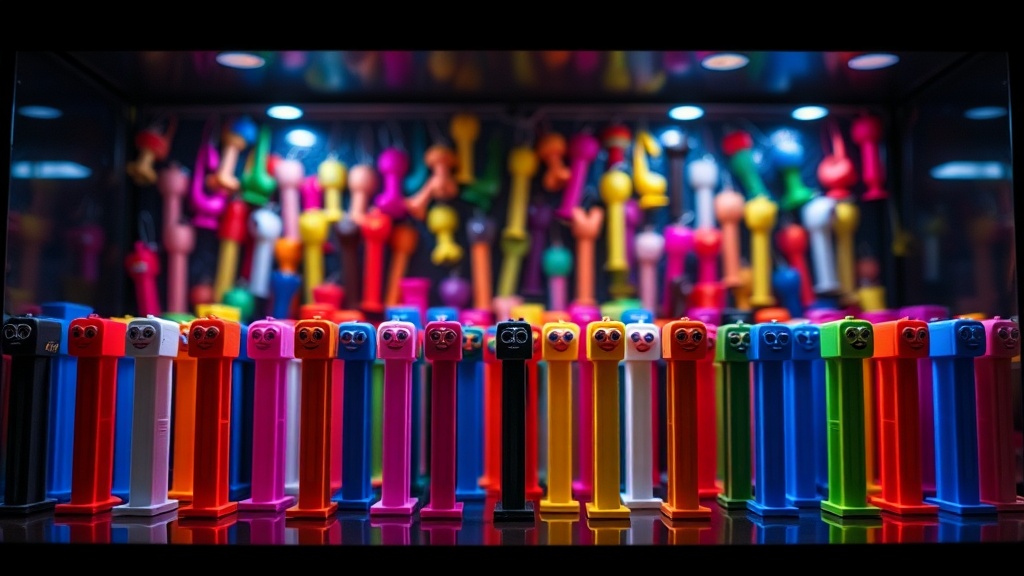
Complete Guide to Displaying and Storing Your Pez Collection

This guide covers practical methods for storing, organizing, and showcasing Pez dispensers—from loose vintage pieces to carded mint-in-package collectibles. Whether the collection spans a dozen dispensers or several thousand, proper display and storage techniques protect value, prevent damage, and make the collection enjoyable to view daily.
What's the Best Way to Display Pez Dispensers Without Damaging Them?
The best display method depends on the dispenser's condition, packaging, and the collector's available space. Loose dispensers offer flexibility. Carded items need different consideration entirely.
For loose dispensers, acrylic risers and stepped display shelves work beautifully. The Container Store's Expandable Acrylic Shelf provides tiered visibility without blocking light. These run about $25-35 and accommodate roughly 15-20 standard dispensers per tier.
Wall-mounted solutions save surface space. Shadow boxes from Michaels or IKEA's RIBBA frames (9x9 inches, $9.99) create gallery-style presentations. The depth matters—standard dispensers need at least 2 inches of clearance. Deeper pieces (Hello Kitty, some Disney characters) require 3-inch depths minimum.
Here's the thing about direct sunlight: it'll fade stems and damage packaging faster than you'd expect. UV-protective acrylic cases cost more upfront—expect $40-60 for a 24-dispenser case—but they pay for themselves preserving color integrity on vintage pieces. BCW Supplies manufactures archival-quality display cases specifically sized for Pez.
Carded dispensers present unique challenges. The cardboard backing warps with humidity. Peg holes tear with improper hanging. Acrylic carded display cases (often called "slabs" in collector circles) protect the entire package. These run $3-8 per case depending on size—pricey for large collections, but non-negotiable for high-value items.
How Should Pez Dispensers Be Stored Long-Term?
Long-term storage requires controlling environmental factors: temperature stability, humidity levels, and physical protection from dust, pests, and crushing weight.
Climate control isn't optional for serious collectors. Ideal conditions stay between 65-75°F with 45-55% relative humidity. Basements flood. Attics bake. Spare closets work better than garages—though even closets need monitoring. A $15 hygrometer from any hardware store tracks conditions accurately.
Storage containers matter more than most newcomers assume. Avoid cardboard (acidic, attracts pests) and non-archival plastics (PVC off-gassing damages stems over decades). The gold standard? Sterilite Gasket Boxes with foam padding inserts. These create airtight seals and stack securely. A 20-quart box holds approximately 100 loose dispensers with dividers.
For organized collectors, compartmentalized storage wins. Plano 3700 Series tackle boxes—yes, fishing gear boxes—feature adjustable dividers perfect for separating dispensers by series, stem color, or acquisition date. Each box runs $8-12 at Walmart or sporting goods stores. The latches keep contents secure during moves.
| Storage Method | Best For | Cost Estimate | Capacity |
|---|---|---|---|
| Sterilite Gasket Box (20 qt) | Long-term bulk storage | $15-20 per box | ~100 loose dispensers |
| Plano 3700 Tackle Box | Organized access, travel | $8-12 per box | ~40-60 dispensers | BCW Acrylic Card Cases | High-value carded items | $3-8 per case | 1 carded dispenser each |
| Zippered Binder Pages | Slim carded dispensers | $20-30 per binder | ~9-12 per page |
The catch? Stems can stick when stored long-term. Springs compress. Candy residue (even microscopic traces) crystallizes. Collectors rotating storage should handle dispensers quarterly—compress the spring, check for residue, ensure nothing's fused. It's maintenance, not paranoia. Vintage dispensers with metal springs are especially prone to seizing.
For truly valuable pieces—pre-1980s no-feet, soft-head Disney characters, or convention exclusives—individual archival bags offer extra protection. Crystal clear bags from CSP Archive prevent stem rubbing while maintaining visibility. At roughly $0.15 per bag, they're cheap insurance.
Organizational Systems That Actually Work
Storage without organization creates chaos. Pez dispensers multiply mysteriously—one day it's twenty pieces, suddenly it's hundreds.
Successful collectors develop personal cataloging systems. Some organize by stem color (the rainbow method). Others group by license (Disney, Star Wars, sports teams). Many sort chronologically by release year. There's no wrong approach—consistency matters more than the specific system.
Digital tracking prevents duplicate purchases and documents value. Collector software like Collectorz.com offers Pez-specific databases. Free alternatives include Google Sheets templates shared among collector communities. Photograph every piece. Note condition, purchase price, date acquired, and any provenance details.
Physical labeling completes the system. Masking tape on box exteriors. Inventory numbers matching digital records. Some collectors use QR codes linking to database entries—overkill for casual collections, invaluable when managing 500+ pieces.
What Display Options Work Best for Different Types of Collectors?
Different collecting styles demand different approaches. The casual collector, the completionist, and the investor each need tailored solutions.
The Casual Collector (Under 100 pieces): Rotating displays keep the collection fresh. A small curio cabinet or floating shelves accommodate the full collection while highlighting favorites. IKEA's MOSSLANDA picture ledges ($9.99, 45 inches) display 25-30 dispensers attractively. Change the arrangement seasonally.
The Thematic Collector: Grouping by theme creates visual impact. Holiday dispensers rotate into living room displays during appropriate seasons. Sports collections belong near the TV on game days. Pez themselves become seasonal decor—functional collecting.
The Completionist (500+ pieces): Museum-style presentation becomes impractical. These collectors often combine display and storage—rotating "exhibitions" while the bulk stays protected. Some install custom cabinetry with glass fronts. Others dedicate entire rooms (the legendary "Pez rooms" documented in collector documentaries).
Worth noting: complete set collectors face space mathematics. A full set of current U.S. releases runs 80-120 dispensers annually. Ten years of collecting fills significant wall space. Plan accordingly.
The Investor: Protection supersedes display. UV-blocking acrylic, climate-controlled environments, and minimal handling preserve condition grades. Graded dispensers (authenticated and slabbed by services like CGA—Collector's Grading Authority) require specific case sizes. Display becomes secondary to preservation.
Creative Display Ideas From the Community
Pez collector communities generate ingenious solutions. Repurposed test tube racks hold dispensers stem-down, preventing dust accumulation in heads. Vintage soda crates provide rustic compartmentalization. Custom LED backlighting turns displays into art installations.
One Asheville collector (local to this blog's perspective) mounted vintage wooden soda crates vertically, creating 24-slot honeycomb displays. The wood contrasts beautifully with colorful plastic stems. Another local enthusiast uses antique printer's trays—shallow wooden compartment boxes historically used for metal type. These accommodate carded dispensers perfectly in their shallow wells.
Repurposed retail fixtures offer industrial solutions. Old greeting card spinner racks, refurbished and wall-mounted, hold dozens of carded dispensers accessibly. Pharmacy vintage card display racks occasionally surface at estate sales—perfect dimensions for Pez packaging.
Common Mistakes to Avoid
New collectors inevitably damage pieces learning these lessons. Skip the painful education.
Never store dispensers with candy loaded. Sugar attracts pests. Old candy crystallizes, permanently jamming mechanisms. The vintage Pez with original candy intact? That's a display piece only—don't attempt to clear it.
Avoid rubber bands for bundling. They degrade, sticking to stems and leaving permanent yellow marks. Use archival-safe twist ties or individually bag items instead.
Don't display near heat sources. That sunny windowsill fades stems within months. Radiators warp plastic. Kitchen displays expose pieces to cooking grease—a nightmare to clean from textured head surfaces.
That said, some "damage" is acceptable history. Patent number embossing variations, manufacturing quirks, even minor scuffs on genuinely vintage pieces tell stories. The goal isn't perfection—it's preservation of character alongside condition.
Transporting and Traveling With Pez
Conventions, trades, and collector meetups require mobile solutions. Ziploc bags inside rigid containers prevent shifting. Egg cartons cradle dispensers surprisingly well for short trips. Pelican cases with custom foam inserts protect high-value pieces during air travel.
Carrying carded inventory to shows? Comic book long boxes with bubble wrap partitions prevent corner damage. Never stack heavy items atop carded displays—the cardboard creases permanently.
Shipping presents additional challenges. Double-box valuable pieces. Use bubble wrap generously—dispenser heads scratch easily. "FRAGILE" labels help, but adequate packaging matters more than warnings. USPS Priority Mail includes $50-100 insurance; declare full value for expensive items.
"The best storage system is the one you'll actually maintain. A complex organizational scheme that collapses after three months wastes more time than simple consistent methods." — Veteran collector wisdom from Pez conventions
Display and storage choices ultimately reflect collecting philosophy. Some seek museum-quality preservation. Others prioritize daily enjoyment and accessibility. Most find balance between protection and presentation—enough security to preserve value, enough visibility to appreciate the collection's joy. The colorful characters lined up on shelves, ready to spark conversation or nostalgic smiles, justify the effort of proper care.