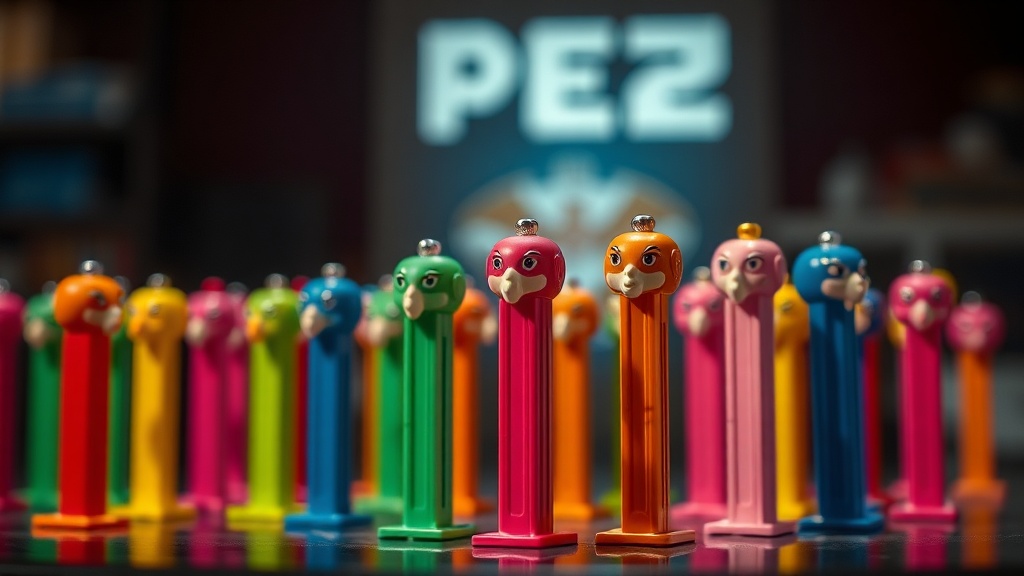
Beyond the Candy: Unpacking the Engineering Evolution of Pez Dispensers

How did Pez dispenser designs change over time?
While the vibrant character heads of Pez dispensers capture immediate attention, the true connoisseur often looks beyond the pop culture facade to the fascinating engineering beneath. Many might not realize that early Pez dispensers, long before beloved cartoon figures adorned them, featured intricate internal mechanisms—some even patented with unique spring systems—designed purely for efficient candy delivery. This mechanical ingenuity marks a rich history of subtle, yet significant, design shifts that reveal much about a dispenser's age, rarity, and place in Pez lore.
The journey of the Pez dispenser, from its humble beginnings in 1949 as a cigarette lighter-shaped device for breath mints, is a story steeped in continuous — albeit often understated — innovation. The initial design, purely utilitarian, prioritized function. These early models, often referred to as 'regulars' or 'stemless' among collectors, had no character heads, sporting only a simple, colored rectangular head. The dispensing mechanism was relatively straightforward, relying on a spring-loaded follower that pushed the candy forward. It was an exercise in minimalist design, a testament to the post-war era's focus on practicality.
However, the real revolution began in the mid-1950s when Pez made its foray into the American market, strategically pivoting from adult breath mints to children's candy. This shift necessitated a more engaging design, leading to the introduction of the first character-head dispensers. These early character dispensers, such as Santa Claus and Mickey Mouse, were still relatively basic in their construction. Their heads often attached directly to the candy-holding stem, lacking the distinct 'feet' we associate with modern Pez dispensers.
Over the decades, design refinements became more pronounced. The stem, the candy magazine of the dispenser, saw numerous variations. Some early stems were thick and rigid, while later models introduced thinner, more flexible plastic. The spring mechanisms themselves underwent iterative improvements to ensure smoother candy delivery and greater durability. These alterations were rarely dramatic, but rather a series of measured steps—each contributing to the overall user experience and, inadvertently, to the complex taxonomy that collectors use today.
What do 'IMC' and 'no feet' mean for collectors?
For those new to the Pez collecting world, terms like 'no feet' and 'IMC' might sound like obscure jargon, but they represent crucial identifiers in understanding a dispenser's lineage and value. 'No feet' refers to dispensers manufactured before 1987 that, quite literally, lack the small plastic feet at the base of the stem. These feet were added to increase stability, preventing the dispensers from tipping over when standing upright. The absence of these feet instantly signals an older, generally more collectible item, as they hail from an era when packaging—not display—was the primary concern for stability.
The transition to 'feet' was a significant, albeit practical, engineering decision that forever changed the aesthetic of the Pez dispenser. Dispensers made with feet are far more common and, as a rule, less sought after by vintage collectors than their footless predecessors. However, it’s not always a simple divide; there are transitional pieces, and the specific year 1987 serves as a general guideline, not an absolute. Some specific character dispensers retained their 'no feet' design longer due to production cycles or regional variations.
'IMC' stands for 'Injection Mold Code,' a small, embossed number found on the lower left side of the dispenser's stem. This code typically ranges from 1 to 9, indicating the specific mold used during manufacturing. While not as universally recognized as the 'no feet' distinction, the IMC can be invaluable for pinpointing specific production runs, identifying variations within a particular character release, and even distinguishing between different factories or regions of origin. Savvy collectors use IMCs to track subtle differences in plastic color, head sculpts, or spring mechanisms that aren't immediately obvious.
Understanding IMCs requires a keen eye and often cross-referencing with dedicated collector databases or guides. For example, two seemingly identical Batman dispensers might have different IMCs, implying they came from different molds, possibly with slight variations in the plastic formulation or even minuscule changes to the character's facial features. This level of detail elevates collecting from simply acquiring objects to engaging in a form of industrial archaeology, piecing together the production history of these beloved plastic toys.
Where can collectors learn more about Pez dispenser patents?
The world of Pez patents is a labyrinthine but rewarding area for the dedicated collector. Unraveling the patent numbers stamped on the side of a dispenser can offer definitive clues about its age, country of origin, and even specific design innovations. These numbers, often small and sometimes obscured, correspond to actual utility or design patents filed with government intellectual property offices around the world. They represent the legal protection Pez sought for their unique mechanisms and aesthetic contributions.
Most commonly, collectors encounter patent numbers from the United States (e.g., 2.620.061, 3.410.455, 3.845.882, 3.942.683, 4.966.305, 5.984.285) and sometimes European patents. Each number signifies a particular design or functional improvement. For instance, the 2.620.061 patent, granted in 1952, covers the basic mechanism of a Pez dispenser, while later patents address refinements like the addition of feet or changes to the candy feeding system. Consulting resources like the