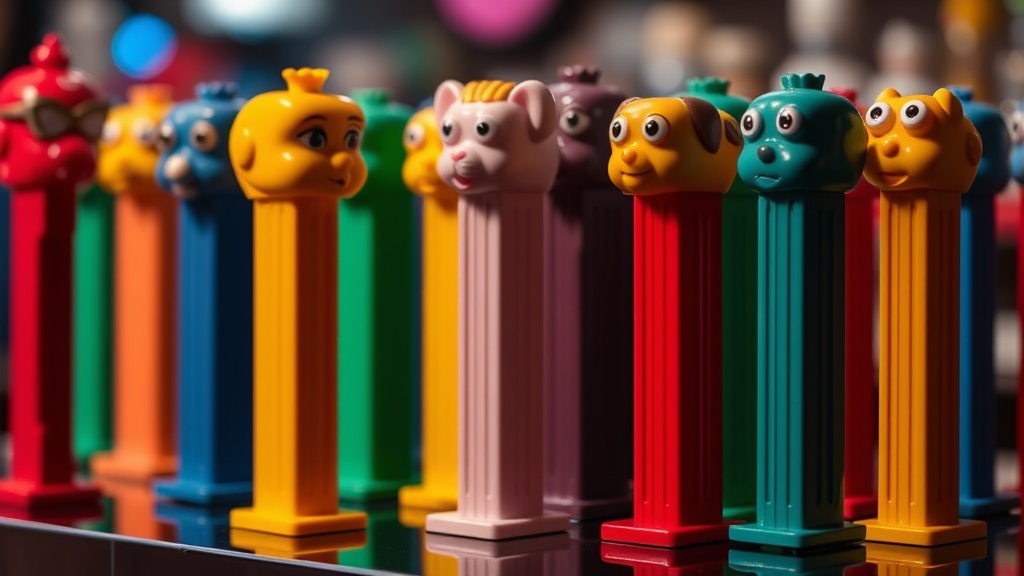
Beyond the Basics: Discovering the Distinctive Features of Collectible Pez Dispensers

What makes a Pez dispenser truly stand out from the rest?
This guide will equip you with the knowledge to identify authentic Pez dispensers, distinguish valuable variations, and understand the nuanced factors that contribute to a dispenser's worth. We'll explore key identifiers and offer strategies for informed collecting, helping you make smart additions to your display. Understanding these details isn't just about spotting high-value items; it's about appreciating the rich production history and the subtle artistry behind each piece.
For many collectors, the thrill comes from finding those slight variations that set one dispenser apart from another. These aren't always obvious to the untrained eye, but they’re the bread and butter of serious Pez enthusiasts. Consider head molds, for instance. Early dispensers often feature 'soft head' designs, lacking the crisp, defined edges of later models. These early versions can have subtle differences in facial expressions, hair styles, or even eye placement due to mold degradation or minor design tweaks over time. Then there are the stem colors – while a character might typically appear on a red stem, a rare blue or green stem could indicate a regional exclusive, a limited run, or even a factory error. These unexpected color pairings are often highly prized.
Another significant factor lies in the patent numbers stamped onto the dispenser stem. These aren't just legal boilerplate; they're historical markers. Older patent numbers, like 2.620.061 (the earliest US patent for the dispenser mechanism) or 3.410.455, typically signify an older dispenser. Dispensers with these early patents are often from a period when Pez was still finding its footing in the market, making them inherently scarcer. Similarly, the country of origin — marked as “MADE IN AUSTRIA,” “HONG KONG,” or “SLOVENIA” — offers clues about production eras and potential regional exclusives. Sometimes, the same character was produced in different factories, leading to unique mold distinctions.
Perhaps one of the most widely recognized distinctions is the presence, or absence, of feet. Prior to 1987, Pez dispensers were designed without feet, featuring a streamlined, almost cylindrical base. These 'no feet' dispensers are almost universally older and, consequently, often more desirable to collectors. The addition of feet was a practical decision, improving stability on shelves, but it also created a clear demarcation point in Pez history. When you're assessing an older character, checking for feet is often the first step in dating it and determining its potential vintage appeal. Keep an eye out for thin hands versus thick hands on certain character molds too, as these minor changes reflect manufacturing updates and can signify distinct production runs.
How can you tell a genuine vintage Pez from a reproduction or a fake?
Authenticating vintage Pez dispensers requires a keen eye and a good dose of research. It's not uncommon to encounter reproductions, or even outright fakes, especially with popular or high-value characters. One of the primary indicators of authenticity lies in the mold marks and copyright information. Genuine vintage dispensers nearly always have clear, albeit sometimes faded, copyright dates and manufacturer identifiers. Look for the PEZ logo, usually found on the side of the stem, and examine its font and style — these have evolved over the decades. The country of manufacture stamp, as mentioned, is also crucial. Discrepancies here can be a red flag; for instance, a dispenser claiming to be “MADE IN AUSTRIA” but displaying characteristics inconsistent with Austrian production of that era warrants further investigation.
The material itself can offer clues. Older plastics tend to have a different tactile quality — they might feel slightly denser, less glossy, or even exhibit a subtle patina that’s difficult to replicate. Be wary of a “vintage” dispenser that looks too perfect, with plastic that feels too new or colors that are too vibrant for its purported age. Recasts, which are copies made from existing dispensers, often have softer details, less defined edges, and sometimes even small air bubbles or inconsistencies in the plastic. They may also be slightly smaller or larger than an authentic counterpart.
Outright fakes sometimes present more obvious flaws: incorrect color combinations for a known character, poorly applied paint, or stem mechanisms that don’t operate smoothly. Some fakers attempt to pass off custom-painted dispensers as rare factory variants. The key here is knowing the established variations for a particular character. If a color scheme or design element seems unfamiliar, it’s essential to cross-reference it with authoritative collector guides or online databases. When in doubt, scrutinize the dispenser under magnification. Details like sprue marks (where the plastic was injected into the mold) or subtle seams can often reveal manufacturing anomalies that point to a reproduction.
The process of authenticating is less about a single definitive test and more about accumulating evidence. Does the patent number align with the character's known production period? Does the plastic feel right? Are the mold details sharp and consistent with known examples? Answering these questions collaboratively helps build a strong case for — or against — authenticity. Trust your instincts, but always back them up with research.
Where should collectors look for reliable information and community insights?
Navigating the world of Pez collecting is much easier when you’re connected to reliable resources and a supportive community. These networks are invaluable for identifying rare finds, authenticating suspicious pieces, and simply sharing your passion. The official